A long rail, cover or bracket may fit at one point yet fail to sit correctly against the assembly. When ordering a batch, specify the support arrangement and inspection conditions as well as the dimensions. This guide addresses the shape of the manufactured part, rather than the clearance between two mating parts.
Where does the risk of warpage come from?
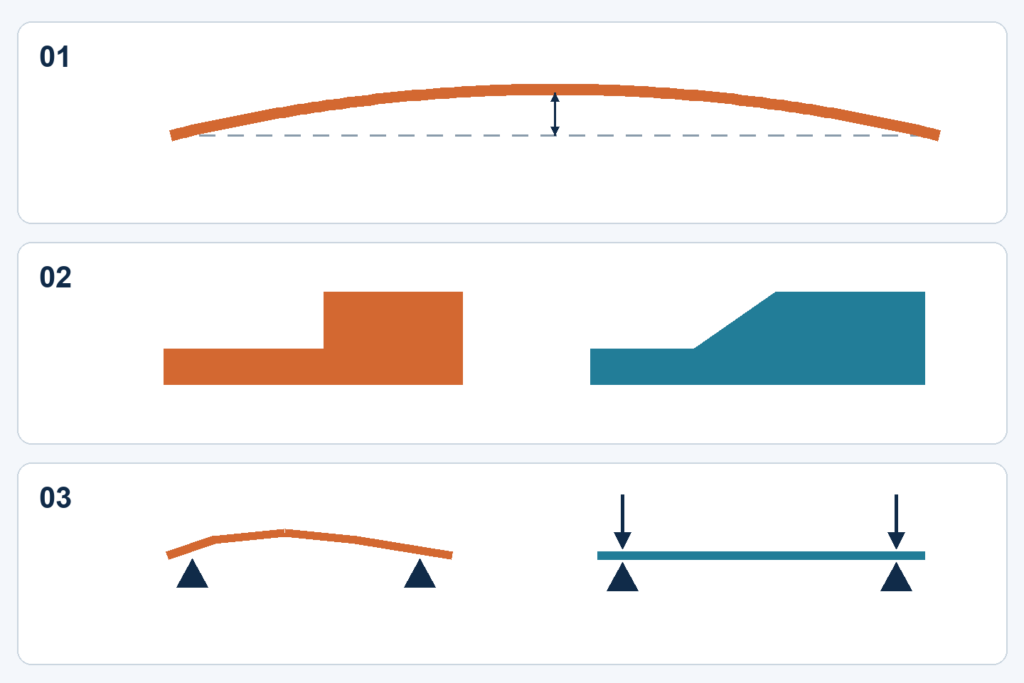
HP notes that long, thin geometries and abrupt cross-section changes can promote uneven shrinkage during cooling. Making the entire model thicker is not a universal solution. The manufacturer recommends reviewing section transitions and cautions against indiscriminately adding ribs to large flat surfaces.
Three issues to keep separate
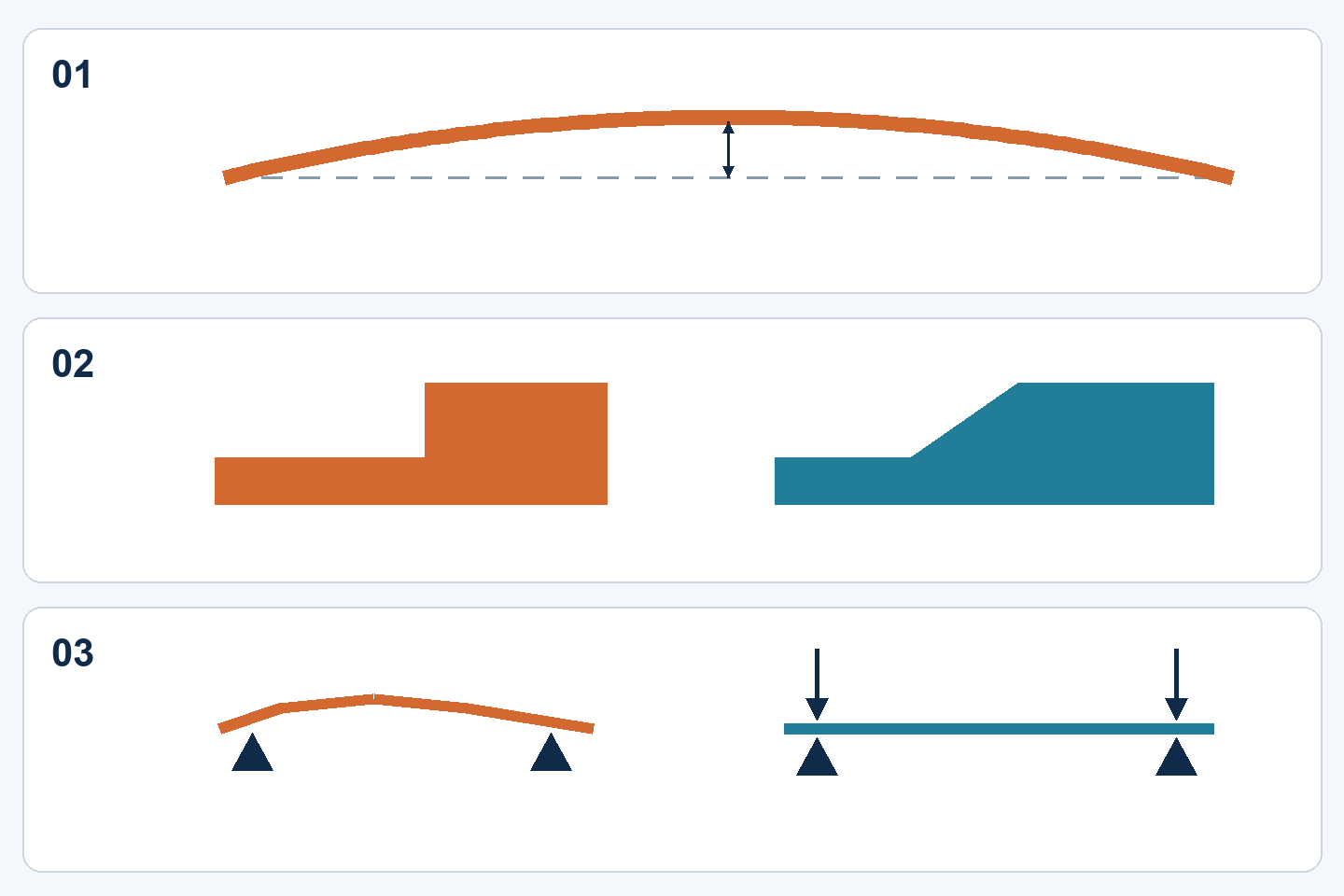
1. Define the mating requirement
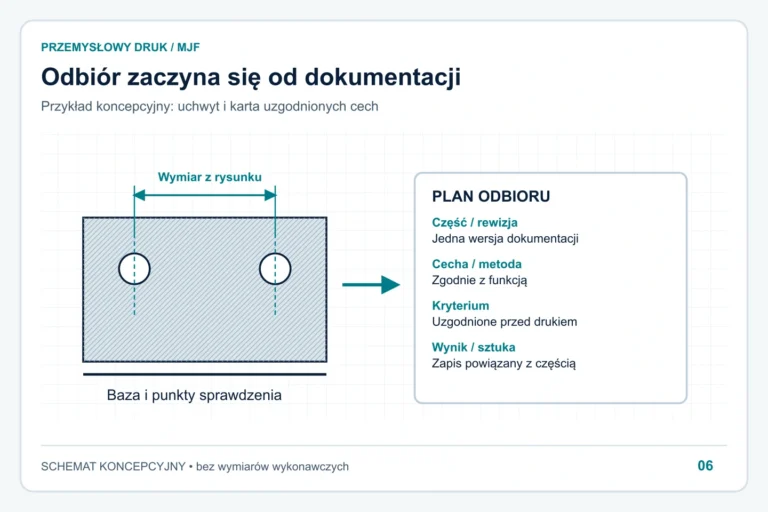
Instead of writing “the part must be straight”, mark the mating surface and describe its function. Does a cover compress a gasket? Does a rail guide a product? Must a bracket align with several spaced holes? Each situation needs a different acceptance criterion. A length dimension alone does not define a flatness requirement.
Include a view identifying the surface, the mounting locations and whether acceptance applies before fastening or after assembly. If a technical drawing is available, specify the geometric requirement and relevant datums. Agree the permitted deviation with the supplier before ordering, rather than applying one tolerance to the entire model.
2. Compare design variants by function
Prepare a baseline and change only one feature for a trial, such as a section transition or mounting arrangement. Identify the file revisions. Use the same measurement and assembly procedure for both versions. This comparison helps establish whether the change benefits the actual assembly. An appealing cross-section alone is not enough to approve a batch.
Do not force a sample straight during inspection if the requirement applies to its free state. If the part will operate in a fixture, define its support points and clamping method. Record the free-state and mounted results separately. This distinguishes the delivered shape from the effect of assembly.
3. Agree inspection before a short production run
Before approving a batch, prepare a simple inspection record: revision number, assessed surface, support arrangement, measurement method, acceptance criterion and assembly-trial result. State whether measurement applies after cleaning or after additional finishing. Do not compare an unfinished sample with a finished part without recording that difference.
For a part responsible for sealing, guiding or positioning, agreement with the 3D model does not replace a functional test. Establish who approves the sample and which results authorize the next units. If requirements cannot be demonstrated, revise the design or process before replicating an unverified part.
What should you send for review and a quote?
Send the model, quantity, a drawing with requirements, and a photograph or sketch of the assembly. Mark critical surfaces and state whether you need a sample or a batch. An online model quote starts the manufacturing discussion; special flatness requirements and additional inspection must be agreed before production.
Related information
PA12 properties and limitations
Assembly clearances and tolerances
Technical source
HP — MJF design guidance, checked 16 November 2026
The rest of this guide proposes a requirements and inspection workflow; it is not a guarantee of process performance. The graphic is an original explanatory schematic, not documentation of a customer project.