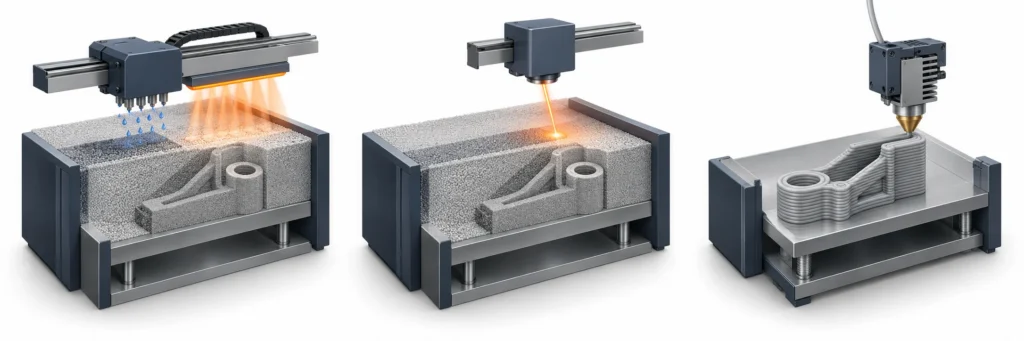
From left: MJF — process agents and heat; SLS — laser; FDM/FFF — a nozzle depositing filament paths. Simplified AI illustration, not to scale. Beam and droplet colours are illustrative.
MJF, SLS and FDM are different manufacturing methods, not three quality grades. Start with geometry, material, quantity and the required function. Then compare manufacturing offers.
With polyamide prints, it is particularly easy to confuse process and material. Fibre-filled filament and PA12 powder are not interchangeable simply because both are described as “nylon”.
What distinguishes these technologies?
| Feature | MJF | SLS | FDM/FFF |
|---|---|---|---|
| Material form | Powder | Powder | Filament |
| Build method | Process agents and thermal energy | Laser fusion of powder | Depositing paths through a nozzle |
| Support during printing | Surrounding powder | Surrounding powder | Supports may be required depending on geometry |
| What should the offer specify? | Exact material, dimensional requirements, finishing and inspection scope | ||
The description of MJF is based on HP documentation, SLS on Formlabs materials, and polyamide filament printing on Prusa's guidance. The table clarifies terminology; it does not replace an assessment of a specific part.
Case 1: you only need to check overall dimensions
If the first version only needs to show whether an enclosure fits between existing components, begin with the requirements of that fit check. The final material is not automatically necessary. Obtain an FDM quote and compare the lead time and scope of the trial.
Record what the test does not cover. External fit does not establish snap-fit durability, heat resistance or final-part behaviour. A change of technology before production requires relevant properties to be checked again.
Case 2: you are ordering a batch of complex brackets
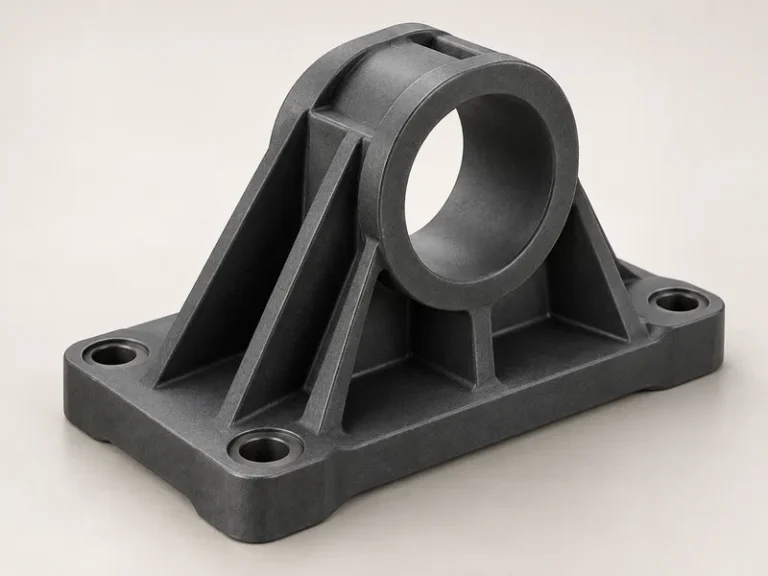
For a bracket with several mounting points, recesses and cable routing, compare powder-based processes. With MJF and SLS, consider whether powder can be removed from the geometry. The absence of conventional supports does not make every enclosed channel easy to produce and clean.
Send the same model and requirements for both quotes. If one price includes hole finishing and the other covers only printing, the difference is not solely due to the technology.
Case 3: the part operates under load
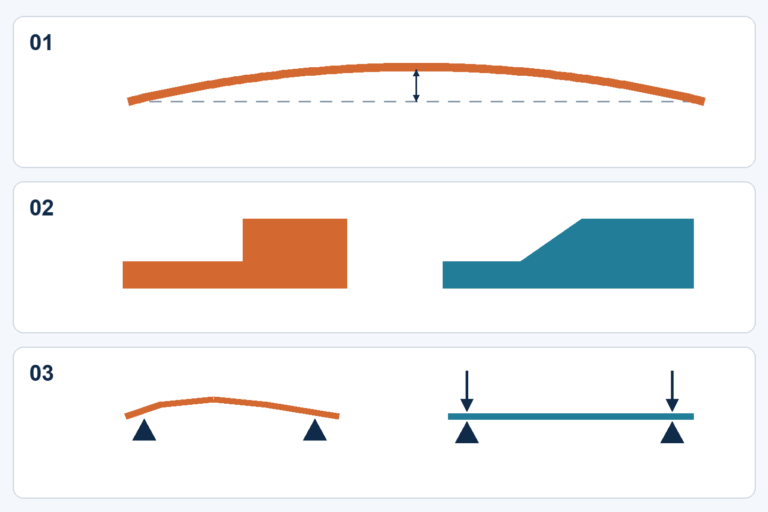
Do not choose a process based only on a photograph or a general strength claim. Ask for data for the offered material and agree a part test. For filament prints, pay particular attention to path and layer orientation. In every process, assess stress concentrations and assembly.
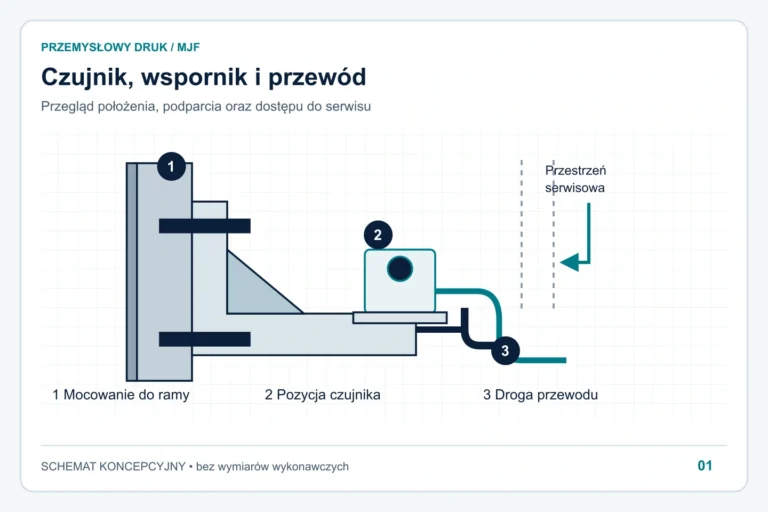
For example, mounting a heavy sensor on a long arm changes what the bracket must withstand. Reducing the overhang or changing mounting-point spacing may matter more than switching to another printer.
What should you really compare in the price?
Compare the cost of an accepted part with a defined function. Include preparation, manufacturing, post-processing, any trial and the number of units. For an assembly, also include assembly time. There is no universal quantity above which MJF always costs less than FDM or SLS.
If you revise the model after testing, make sure subsequent offers refer to the same revision. Only a like-for-like comparison supports a purchasing decision without guesswork.
Where should you start?
Send the model, quantity, function description and acceptance requirements. If the technology is not prescribed, state that it can be selected for you. Our MJF calculator lets you start with a model quote, while an individual enquiry lets you discuss non-standard requirements. Basic terminology is explained in our article what is MJF.