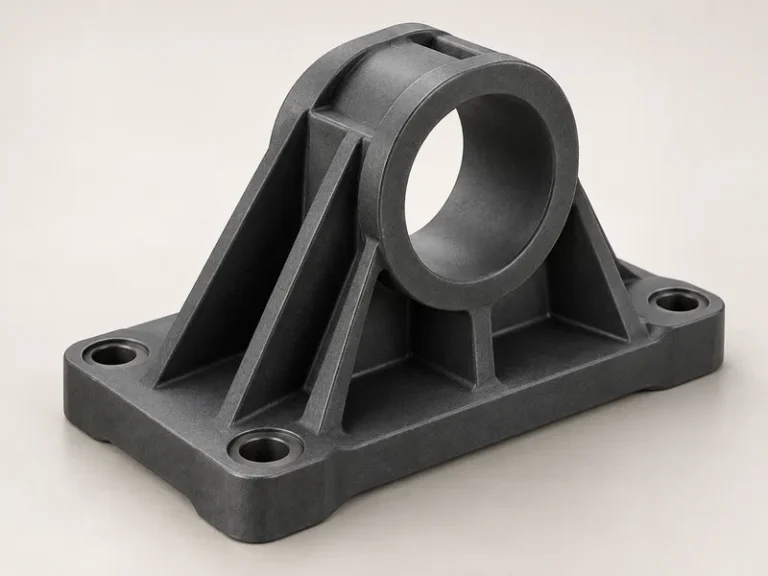
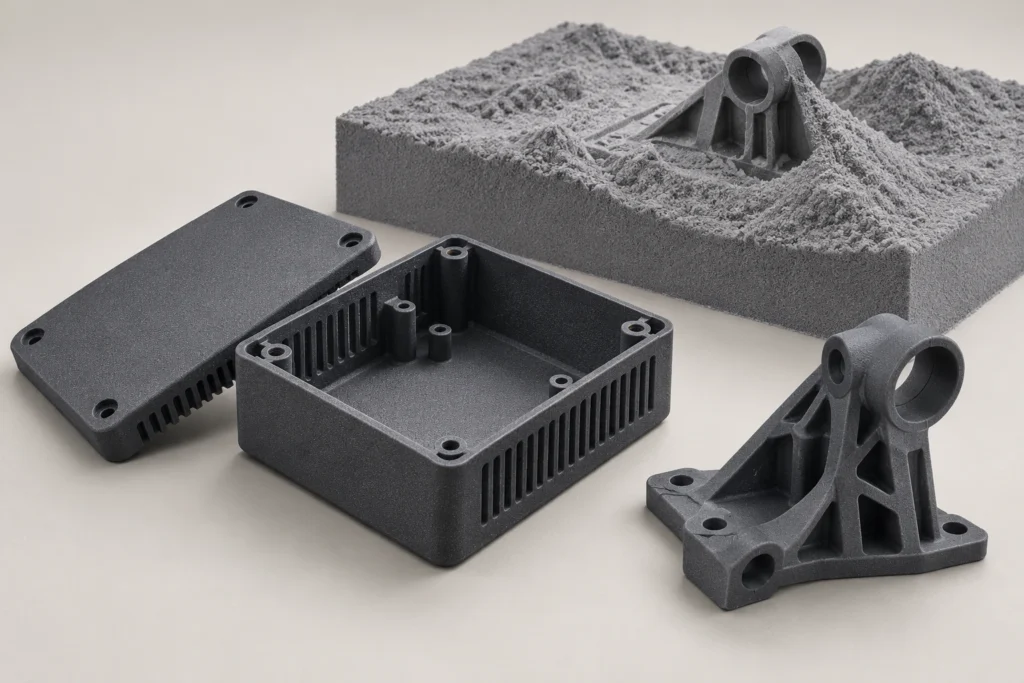
Example enclosure and bracket, plus a part surrounded by powder. AI-generated concept illustration, not a photograph of completed work.
MJF, or Multi Jet Fusion, is HP's technology for 3D printing with plastic powder. It makes parts from a computer model without requiring an injection mould. It can be used both for a prototype tested in a device and for a batch of parts intended for use.
In practice, you do not need to know how to operate the printer to order a part. It is more important to specify what the part must do, what it connects to and how many units you need. The technology is selected for that task.
MJF is a manufacturing process; PA12 is a material
These two names often appear together, but they mean different things. MJF describes how a part is manufactured. PA12 means polyamide 12, one of the materials used in printing. The term “MJF PA12” therefore identifies both the process and the material.
This distinction helps when ordering. Asking for a “nylon print” does not specify the grade or manufacturing method. Two similar-looking parts can have different structures and behave differently under load.
How is the part made?
The printer spreads a thin layer of powder. It applies process agents in selected areas, and thermal energy fuses the material according to the cross-section of the model. Repeating this process builds the part layer by layer. We explain the details in our guide to how MJF printing works, step by step.
What can MJF be used for?
Consider a measuring-device manufacturer that needs an enclosure tailored to its own circuit board. It must allow for connector openings, mounting points and service access. A printed enclosure lets the manufacturer test this arrangement before ordering a larger batch. After testing, the model can be revised instead of immediately modifying expensive production tooling.
Another example is a sensor adapter for an existing machine. The machine's mounting points stay unchanged, while the new part adapts the equipment to them. Cable guides, brackets, guards and tooling components can be considered in the same way. These are possible applications, not a claim that every such part is suitable for MJF.
Can a print be a finished part rather than just a mock-up?
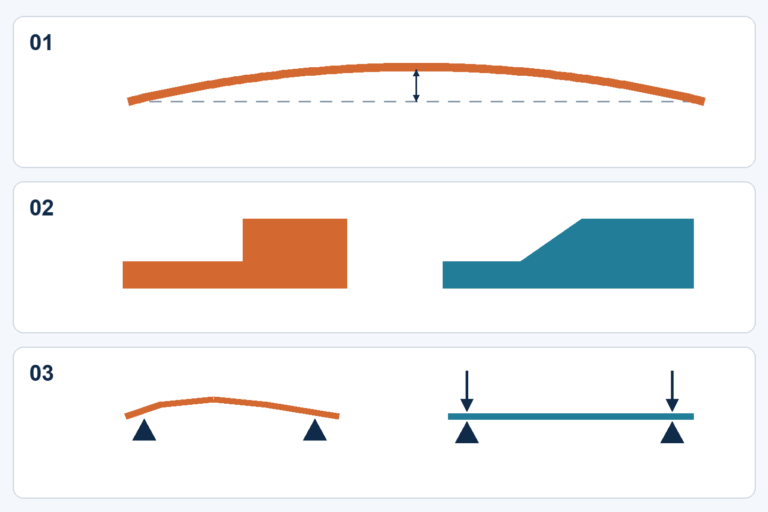
Yes, but suitability depends on the design and verification of the operating conditions. Loads, temperature, assembly method and acceptance criteria must be defined. A trial fit confirms compatibility; it does not yet confirm durability over thousands of cycles.
For an adapter, check tool access to the screws and behaviour after tightening. For a cover, check whether it can be removed without dismantling half the device. For a bracket, consider what happens under a sustained load. These questions lead to a better order specification than simply asking for a “strong print”.
When should you compare MJF with another process?
A simple size-and-fit mock-up may not require industrial powder-based printing. A part that must conduct heat or achieve a particular stiffness may need to be metal. For a large, stable production run, injection moulding is also worth costing. MJF is one option to assess using the specific model and quantity.
How do you order your first MJF print?
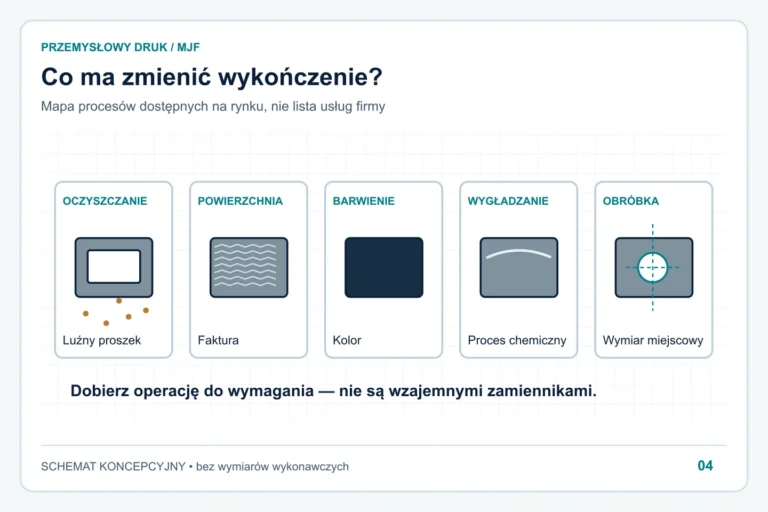
Prepare your model, quantity and a short description of the application. Mark surfaces that mate with other parts. If you have several revisions, identify the correct one. At Przemysłowy Druk, we use the HP Jet Fusion 5600. Our service scope is described on the MJF page, and you can submit a finished model for an online quote.